Home » Answers to the Most Asked Questions About Turkey
Answers to the Most Asked Questions About Turkey
Turkey is a fascinating country where ancient traditions blend seamlessly with modern life. Situated at the crossroads of Europe and Asia, Turkey offers a rich tapestry of cultures, historical landmarks, and diverse landscapes, making it one of the most captivating destinations in the world. From the bustling metropolis of Istanbul, where East meets West, to the tranquil beaches of the Mediterranean, and the surreal landscapes of Cappadocia, Turkey attracts millions of visitors each year. Big country, and we are here to answer to your questions about Turkey!
Turkey’s strategic geographic location, spanning two continents, has shaped its unique identity, with influences from the Byzantine, Roman, Ottoman, and modern Turkish civilizations. Whether you are curious about its historical significance, eager to explore its stunning natural beauty, or interested in its thriving economy and investment opportunities, Turkey has something to offer everyone.
This guide covers 100 of the most frequently asked questions about Turkey, providing in-depth answers on topics such as travel, culture, religion, business, and much more. Whether you’re planning a visit or considering moving to Turkey, this article will give you all the essential information you need to make the most of your experience in this extraordinary country.
Geography and Politics
Touristic Turkey Map with famous things and places
1. Is Turkey in Europe or Asia?
Turkey is a transcontinental country, with 97% of its landmass in Asia and 3% in Europe. The Bosphorus Strait divides Istanbul between the two continents, making it the only city to span both Europe and Asia.
2. What is the capital of Turkey?
The capital of Turkey is Ankara, though Istanbul is its largest and most famous city.
3. Is Turkey a European country?
Geographically, a small part of Turkey is in Europe, but politically and economically, Turkey is a member of various European organizations, including NATO. However, it is not a member of the European Union.
4. Is Turkey part of NATO?
Yes, Turkey has been a NATO member since 1952 and plays a significant role in the alliance’s defense strategy due to its strategic location.
5. Is Turkey a democracy?
Yes, Turkey is a democratic republic with a multi-party political system, although concerns about press freedom and the centralization of political power have been raised in recent years.
6. Is Turkey safe for tourists?
Yes, Turkey is generally safe for tourists, especially in major cities like Istanbul, Antalya, and Cappadocia. It’s advisable to avoid areas near the Syrian border due to political instability, but overall, Turkey is a popular and safe destination for travelers.
7. Is Turkey in the Mediterranean?
Yes, Turkey has an extensive Mediterranean coastline, with popular beach destinations such as Antalya, Bodrum, and Fethiye attracting millions of visitors each year.
8. Is Turkey a part of the Schengen Area?
No, Turkey is not part of the Schengen Area. However, Turkey offers an easy online visa application process for many nationalities.
History and Culture
Excavations in Göbekli Tepe has changed the human history
9. Was Turkey part of the Ottoman Empire?
Yes, modern-day Turkey was the heart of the Ottoman Empire, which lasted from 1299 to 1923. The empire dissolved after World War I, and Turkey became a republic under the leadership of Mustafa Kemal Atatürk.
10. Who founded modern Turkey?
Modern Turkey was founded by Mustafa Kemal Atatürk in 1923 after the collapse of the Ottoman Empire. Atatürk implemented reforms to modernize and secularize Turkey.
11. What is the significance of Hagia Sophia?
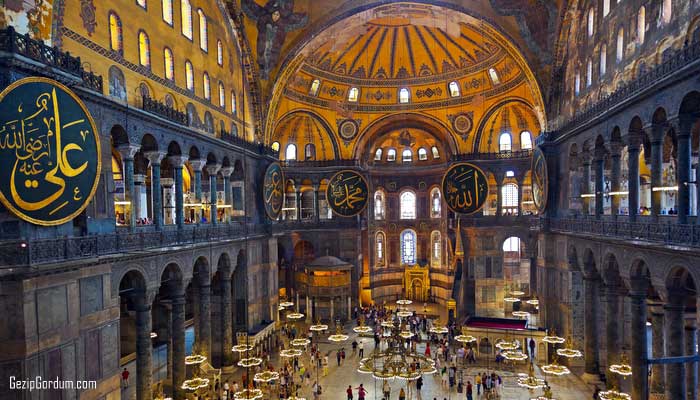
Hagia Sophia, located in Istanbul, is one of the most iconic landmarks in Turkey. Originally built as a cathedral in 537 AD, it became a mosque under the Ottomans and later a museum. In 2020, it was reconverted into a mosque, although it remains a UNESCO World Heritage site.
12. Is Turkey culturally diverse?
Yes, Turkey is culturally diverse, with influences from the Middle East, Europe, Central Asia, and the Balkans. The country has a rich blend of languages, traditions, and cuisines due to its historical role as a crossroads between continents.
Religion and Society
Inside Hagia Sophia
13. Is Turkey a Muslim country?
Yes, about 99% of Turkey’s population is Muslim, primarily Sunni. However, Turkey is officially a secular state, with religious freedom enshrined in its constitution.
14. Is Turkey secular?
Yes, Turkey is a secular republic. The separation of religion and state was established by Atatürk, and despite its predominantly Muslim population, religion plays no formal role in the government.
15. Is Turkey predominantly Sunni or Shia?
Turkey is predominantly Sunni Muslim, but there is a significant Shia minority, particularly the Alevi sect, which represents around 15-20% of the population.
16. Is Turkey LGBTQ+ friendly?
While homosexuality is legal in Turkey, societal acceptance varies. Major cities like Istanbul have more progressive attitudes, but LGBTQ+ individuals may face discrimination, particularly in rural areas.
17. Is Turkey safe for women travelers?
Yes, Turkey is generally safe for women travelers. Women should take the same precautions as they would when traveling in any foreign country, such as dressing modestly in conservative areas and being aware of their surroundings.
Travel and Tourism
Cappadocia is Turkey’s most popular touristic spot
18. What are the best places to visit in Turkey?
Some of the top tourist destinations in Turkey include:
Istanbul (Hagia Sophia, Blue Mosque, Grand Bazaar)
Cappadocia (hot air balloons, fairy chimneys)
Pamukkale (thermal pools)turkiye
Ephesus (ancient city ruins)
Antalya (Mediterranean beaches)
Bodrum (luxury resorts)
Fethiye (Ölüdeniz beach)
Troy (ancient city of the Trojan War)
19. Is Turkey expensive to visit?
Turkey is relatively affordable compared to Western Europe. Accommodation, food, and transport are all reasonably priced, making it an excellent destination for budget travelers.
20. What is the best time to visit Turkey?
The best time to visit Turkey depends on your interests. For sightseeing, spring (April-May) and autumn (September-November) offer mild weather and fewer crowds. Summer is ideal for beach vacations, while winter is perfect for skiing in places like Uludağ and Palandöken.
21. Is Turkey good for solo travelers?
Yes, Turkey is a great destination for solo travelers. Cities like Istanbul and Cappadocia are easy to navigate, and Turkey’s extensive bus and domestic flight networks make it easy to travel alone.
22. Is Turkey a family-friendly destination?
Yes, Turkey is family-friendly with a wide variety of activities, from beaches to historical sites and interactive museums. Many resorts also cater to families with kids’ clubs and family-friendly amenities.
Cuisine and Food
Yatık Döner – Traditional Cag Kebab
23. Is Turkish food healthy?
Yes, Turkish cuisine is considered healthy due to its emphasis on fresh vegetables, lean meats like lamb and chicken, and heart-healthy olive oil. Dishes like grilled kebabs, salads, and soups are popular staples.
24. What is Turkish delight made of?
Turkish delight, or lokum, is a traditional sweet made from sugar, water, and starch. It is often flavored with rosewater, lemon, or pistachio and is served in small cubes dusted with powdered sugar.
25. Is Turkish coffee stronger than regular coffee?
Yes, Turkish coffee is known for its strong, bold flavor. It’s unfiltered and brewed with finely ground beans, resulting in a rich, concentrated drink.
26. What is a traditional Turkish breakfast?
A traditional Turkish breakfast typically includes fresh bread, olives, cheese, tomatoes, cucumbers, jam, honey, eggs, and tea. Simit (a sesame-crusted bread) and menemen (scrambled eggs with tomatoes and peppers) are popular breakfast staples.
Economy and Living Standards
The Grand Bazaar was built in 1455, two years after the Ottomans conquered Istanbul- then known as Constantinople -from the Byzantines. (Image Credit-aNews)
27. Is Turkey a developed country?
Turkey is considered a newly industrialized country, with a growing economy and modern infrastructure. However, it still faces challenges such as regional disparities in income and development.
28. Is Turkey expensive to live in?
Turkey is relatively affordable compared to Western Europe or North America. Living costs, particularly outside major cities like Istanbul, are lower, making it an attractive option for expats and retirees.
29. Is Turkey good for business investments?
Yes, Turkey’s strategic location between Europe and Asia, its young population, and growing industries like tourism, manufacturing, and real estate make it an attractive spot for foreign investment.
30. Is Turkey a tech hub?
Turkey’s tech sector is growing, particularly in cities like Istanbul, which has a vibrant startup scene. The country is also investing in fintech, e-commerce, and digital services.
Climate and Environment
Dead Sea was chosen as the most beautiful beach in the world in 2006
31. Is Turkey hot in the summer?
Yes, summers in Turkey, especially in coastal areas like Antalya and Bodrum, can be very hot, with temperatures reaching up to 40°C (104°F). Inland regions like Cappadocia experience dry heat.
32. Is Turkey a good destination for skiing?
Yes, Turkey has several popular ski resorts, including Uludağ, Palandöken, and Erciyes. These resorts offer good skiing conditions from December to April.
33. Is Turkey affected by climate change?
Like many countries, Turkey is experiencing the effects of climate change, including rising temperatures, droughts, and extreme weather events. Coastal areas are at risk due to rising sea levels.
Miscellaneous
34. Is Turkey prone to earthquakes?
Yes, Turkey is located on several fault lines and is prone to earthquakes. Major cities like Istanbul and Izmir are at risk, and the country has implemented strict building codes to mitigate damage.
35. Is Turkey in the United Nations?
Yes, Turkey is a founding member of the United Nations, having joined in 1945. Turkey plays an active role in the UN and contributes to peacekeeping operations and humanitarian efforts worldwide.
36. Is Turkey a first-world country?
Turkey is often classified as a newly industrialized country rather than a first-world country. It has seen rapid economic growth and modernization, but it still faces challenges like income inequality and regional disparities.
37. Is Turkish tea different from regular tea?
Yes, Turkish tea is typically black tea, brewed strong and served in small tulip-shaped glasses without milk. It is a staple of Turkish culture and is consumed throughout the day, often with breakfast or snacks.
38. Is Turkey a good place for medical tourism?
Yes, Turkey has become a leading destination for medical tourism, particularly for cosmetic surgery, dental care, and hair transplants. The country offers high-quality healthcare at lower costs compared to Western Europe and the U.S.
39. Is Turkish delight really from Turkey?
Yes, Turkish delight, known as lokum, originated in Turkey. It is one of the country’s most famous traditional sweets and is often served with coffee or gifted to visitors.
40. Is Turkey a sun and sea destination?
Absolutely. Turkey’s Mediterranean and Aegean coasts are famous for their pristine beaches, crystal-clear waters, and warm weather. Popular beach destinations like Antalya, Bodrum, and Fethiye attract millions of tourists each year.
41. Is Turkey good for shopping?
Yes, Turkey is a shopper’s paradise, offering a mix of traditional markets and modern malls. Istanbul’s Grand Bazaar is one of the world’s oldest and largest markets, where you can buy carpets, jewelry, spices, and leather goods. In modern malls, you can find international and Turkish brands.
42. Is Turkish coffee stronger than espresso?
Turkish coffee is different from espresso but can be considered stronger due to its brewing process. It is boiled with water and sugar (optional) in a special pot called a cezve and is unfiltered, leaving a thick, rich, and aromatic flavor.
43. Is Turkey a tech-savvy country?
Yes, Turkey is rapidly modernizing, particularly in urban areas. The tech industry is growing, with startups in fintech, e-commerce, and software development leading the way. High-speed internet is widely available in cities, and the digital economy is expanding.
44. Is Turkey prone to natural disasters?
Yes, Turkey is located in a seismically active region and is prone to earthquakes, particularly in cities like Istanbul and Izmir. The country has implemented measures to strengthen infrastructure and minimize earthquake damage.
Culture and Traditions
The dream of the exhibition became real within the scope of the 360 Culture and Art project (Image Credit-TRT Haber)
45. What is traditional Turkish dance?
Turkey is known for several traditional dances, with Halk Oyunları (folk dances) being the most popular. Each region has its own unique style, such as the lively Horon dance from the Black Sea or the graceful Zeybek from the Aegean region. Belly dancing, or Oryantal, is also commonly associated with Turkish culture.
46. What are the main cultural festivals in Turkey?
Turkey celebrates a range of cultural festivals, including:
Kurban Bayramı (Eid al-Adha)
Ramazan Bayramı (Eid al-Fitr)
Republic Day on October 29
The International Istanbul Film Festival and Jazz Festival are also popular annual events.
47. Is it customary to tip in Turkey?
Yes, tipping is customary in Turkey, particularly in restaurants, hotels, and taxis. A 10% tip is generally appreciated in restaurants, while rounding up the fare is common in taxis.
48. What languages are spoken in Turkey?
The official language of Turkey is Turkish. However, other languages such as Kurdish, Arabic, and minority languages like Armenian and Greek are spoken in various regions.
49. What is the traditional Turkish greeting?
A traditional Turkish greeting is a handshake, along with the phrase Merhaba, meaning “Hello.” In more formal or respectful situations, kissing both cheeks is common, especially among close friends and family.
50. How do you say “Thank you” in Turkish?
To say “Thank you” in Turkish, you say Teşekkür ederim. A shorter, more informal version is Teşekkürler.
History and Architecture
Ephesus is the pearl of Turkey just like Göbeklitepe. (Image Credit-Clio Museum Tours)
51. What are some famous historical sites in Turkey?
Turkey is home to numerous UNESCO World Heritage sites and historical landmarks, including:
Hagia Sophia (Istanbul)
The ancient city of Ephesus
Troy (the legendary city of the Trojan War)
The rock-cut churches of Cappadocia
The ancient theater of Aspendos
52. What is the significance of the Blue Mosque?
The Blue Mosque, or Sultan Ahmed Mosque, is one of Istanbul’s most famous landmarks. Built in the early 1600s, it is renowned for its blue-tiled interior and grand architecture, featuring six minarets and a large central dome. It is still an active mosque today.
53. What was the Ottoman Empire?
The Ottoman Empire was one of the longest-lasting and most powerful empires in history, ruling over much of Southeast Europe, Western Asia, and North Africa from 1299 to 1923. It ended after World War I, leading to the establishment of the Republic of Turkey.
Travel Logistics
Though Turkey is among the safest travel destinations, there is still much to do. (Image Credit-TRT World)
54. Do I need a visa to visit Turkey?
Yes, most visitors to Turkey will need a visa, but many nationalities can apply for an e-Visa online, making the process easy and straightforward. Check Turkey’s official visa website for specific country requirements.
55. What currency is used in Turkey?
The official currency of Turkey is the Turkish Lira (TRY). While some tourist areas may accept euros or dollars, it’s best to use lira for most transactions.
56. Is Turkey expensive to live in?
Living in Turkey is generally affordable compared to Western Europe or North America. The cost of living in major cities like Istanbul is higher, but smaller cities and rural areas offer a lower cost of living, making Turkey an attractive destination for expats and retirees.
57. How do I travel around Turkey?
Turkey has a well-developed public transport system, including buses, trains, and domestic flights. Buses are the most common form of long-distance travel, while domestic flights are affordable and save time for those traveling between major cities like Istanbul, Ankara, and Izmir.
58. Can I use credit cards in Turkey?
Yes, credit cards are widely accepted in Turkey, especially in hotels, restaurants, and shopping malls. However, smaller shops and rural areas may prefer cash, so it’s always good to carry some Turkish lira.
59. What are Turkey’s COVID-19 travel restrictions?
Turkey’s COVID-19 travel restrictions have fluctuated depending on the global situation. As of now, Turkey requires travelers to present proof of vaccination or a negative COVID-19 test for entry. Check official government sources for the latest updates.
Nature and Outdoor Adventures
Lycian way is one of the best routes in the world for hiking with more than 500 kms long destination
60. What are some outdoor activities to do in Turkey?
Turkey offers a wide range of outdoor activities for nature lovers, including:
Hot air ballooning in Cappadocia
Paragliding in Fethiye
Hiking the Lycian Way along the Mediterranean coast
Skiing in the mountains of Uludağ and Erciyes
Rafting on the Çoruh River in northeastern Turkey
61. Is Turkey good for hiking?
Yes, Turkey has excellent hiking trails, such as the Lycian Way, which runs along the Mediterranean coast, and the Kaçkar Mountains in the northeast, known for their alpine scenery.
62. What wildlife can be found in Turkey?
Turkey is home to a variety of wildlife, including bears, wolves, wild boars, and a wide range of bird species. The country also has many protected areas and national parks, such as Köprülü Canyon and Dilek Peninsula-Büyük Menderes National Park.
Miscellaneous (Continued)
The key point while shopping at Istanbul’s Grand Bazaar is to bargain as hard as you can. (Image Credit-Flickr)
63. What are some popular souvenirs to buy in Turkey?
Some of the most popular souvenirs from Turkey include:
Turkish carpets and rugs: Handmade rugs, especially from regions like Anatolia, are highly sought after.
Evil eye amulets (Nazar Boncuğu): A traditional charm believed to protect against the evil eye.
Spices: Turkey’s markets are filled with fragrant spices like saffron, cumin, and sumac.
Turkish ceramics: Intricately designed tiles and pottery, especially from İznik, make great gifts.
Turkish delight (lokum): A sweet treat that makes for a popular edible souvenir.
64. Is Turkey a good destination for foodies?
Yes, Turkey is a paradise for food lovers. Its cuisine is a rich blend of Middle Eastern, Mediterranean, and Central Asian flavors. From street food like simit (sesame bread) to fine dining experiences featuring dishes like mezes (appetizers) and grilled meats, there is something for every palate. Don’t miss the chance to try baklava, kebabs, and freshly brewed Turkish tea.
65. Is it safe to drink tap water in Turkey?
In most urban areas, tap water is safe for bathing and brushing teeth, but it’s generally recommended to drink bottled water. In rural areas, stick to bottled or filtered water to avoid potential health risks.
66. What is the time zone in Turkey?
Turkey operates on Turkey Time (TRT), which is UTC+3 year-round. The country no longer observes daylight saving time, so the clocks remain consistent throughout the year.
67. How long should I stay in Turkey to experience the country fully?
A 10 to 14-day trip is ideal to explore the key destinations in Turkey. This allows time to visit Istanbul, Cappadocia, Ephesus, and the Mediterranean coast. For a more in-depth exploration, 2-3 weeks will give you time to relax and visit additional regions like the Black Sea or the southeastern areas.
68. What are the major airports in Turkey?
The main international airports in Turkey are:
Istanbul Airport (IST): The largest and busiest airport, connecting Turkey to destinations worldwide.
Sabiha Gökçen International Airport (SAW): Located on Istanbul’s Asian side.
Antalya Airport (AYT): Popular for those heading to the Mediterranean coast.
Ankara Esenboğa Airport (ESB): Serving the capital city.
69. What is the cost of living in Turkey?
The cost of living in Turkey is relatively low compared to many Western countries. Cities like Istanbul are more expensive, especially in terms of rent and dining out, but smaller cities and rural areas offer a much lower cost of living. Turkey is an attractive destination for expats and retirees due to its affordability.
Cuisine and Food (Continued)
Maras Ice Cream goes very well over the baklava, or any other famous Turkish dessert.
70. What are the most famous Turkish dishes?
Some of the most iconic Turkish dishes include:
Kebabs: Whether it’s doner, shish kebab, or adana kebab, grilled meat dishes are a staple of Turkish cuisine.
Mezes: Small appetizers served before the main course, including dips like hummus, baba ganoush, and stuffed grape leaves (dolma).
Baklava: A sweet pastry made from layers of filo dough, nuts, and syrup.
Lahmacun: A thin, crispy flatbread topped with minced meat, herbs, and spices, often called “Turkish pizza.”
Pide: A Turkish flatbread that comes with various toppings, similar to a pizza, but with unique Turkish flavors.
71. What is Turkish coffee?
Turkish coffee is a strong, unfiltered coffee that is brewed in a special pot called a cezve. Finely ground coffee beans are boiled with water (and sugar, if preferred), and it’s served in small cups with the grounds settling at the bottom. Drinking Turkish coffee is a cultural ritual in Turkey, often accompanied by conversations and fortune-telling from the coffee grounds.
72. What is Turkish tea?
Turkish tea, or çay, is a black tea brewed strong and served in small, tulip-shaped glasses. It is often consumed throughout the day and is a cornerstone of Turkish hospitality. It’s typically served without milk and enjoyed with sugar cubes.
Travel and Tourism (Continued)
Pamukkale – Travertine Bathers
73. Can I use public transportation in Turkey?
Yes, Turkey has a well-developed public transportation system. Major cities like Istanbul, Ankara, and Izmir have metros, buses, trams, and ferries. Intercity travel is easy via buses or trains, and there are many budget-friendly domestic flights for longer distances.
74. Is it easy to rent a car in Turkey?
Yes, renting a car in Turkey is relatively easy, especially in tourist destinations and major cities. However, driving in big cities like Istanbul can be challenging due to heavy traffic, so many tourists prefer to rent a car for exploring coastal areas or the countryside.
75. Is Turkey a good destination for cruises?
Yes, Turkey is a popular stop for Mediterranean and Aegean cruises. Ports like Istanbul, Kuşadası (near Ephesus), and Bodrum are common on cruise itineraries. The Turkish Riviera, also known as the Turquoise Coast, offers beautiful seaside landscapes perfect for cruising.
76. Is there a dress code for visiting mosques in Turkey?
Yes, when visiting mosques in Turkey, both men and women are expected to dress modestly. Women should cover their heads with a scarf and wear clothing that covers their arms and legs. Men should avoid wearing shorts. Shoes are removed before entering the mosque.
77. Is Turkey a pet-friendly destination?
While Turkey is generally not as pet-friendly as some Western countries, many hotels, especially in tourist areas, are becoming more welcoming to pets. There are also pet-friendly parks and areas in cities like Istanbul. However, public transportation with pets can be more limited, so it’s important to check in advance.
78. What are some must-visit natural wonders in Turkey?
Turkey is home to several breathtaking natural wonders, including:
Pamukkale: Terraces of thermal mineral waters cascading down white travertine formations.
Cappadocia: Unique rock formations known as “fairy chimneys,” with hot air balloon rides providing a stunning view.
Mount Ararat: Turkey’s highest peak, said to be the resting place of Noah’s Ark.
Ölüdeniz: A turquoise-blue lagoon surrounded by lush mountains, perfect for paragliding.
79. Is it customary to haggle in Turkish markets?
Yes, haggling is common in traditional markets like the Grand Bazaar in Istanbul. It’s expected that you negotiate the price, especially for items like carpets, jewelry, and souvenirs. However, in more modern stores, prices are usually fixed.
Climate and Environment (Continued)
80. What is the weather like in Turkey?
Turkey has a diverse climate, depending on the region. Coastal areas along the Mediterranean and Aegean enjoy hot summers and mild winters, while the interior of the country experiences more extreme temperatures, with hot summers and cold, snowy winters. The Black Sea region is known for its cooler, rainy climate year-round.
81. Does Turkey have national parks?
Yes, Turkey has many beautiful national parks and protected areas, ideal for nature lovers and outdoor enthusiasts. Some notable parks include:
Göreme National Park (Cappadocia): Famous for its rock formations and ancient cave dwellings.
Mount Nemrut: Home to the ancient statues of King Antiochus I.
Köprülü Canyon National Park: Popular for rafting and hiking in the Mediterranean region.
Dilek Peninsula-Büyük Menderes Delta National Park: A biodiversity hotspot with scenic views and wildlife.
Business and Economy
82. Is Turkey good for entrepreneurs?
Yes, Turkey offers many opportunities for entrepreneurs due to its young population, growing economy, and strategic location as a bridge between Europe and Asia. Sectors like tourism, technology, and real estate are particularly promising for investors and business startups.
83. What are the major industries in Turkey?
The main industries in Turkey include:
Textiles and clothing: Turkey is one of the world’s largest textile producers.
Automotive: Turkey is a major producer of cars, trucks, and buses.
Tourism: A key contributor to the economy, with millions of visitors annually.
Agriculture: Turkey produces a wide range of agricultural products, including hazelnuts, cotton, and olives.
84. Does Turkey have a high unemployment rate?
Turkey’s unemployment rate fluctuates depending on the economic situation. In recent years, the unemployment rate has been higher due to economic challenges, but the government is working to improve job creation, particularly in growing industries like technology and manufacturing.
85. Is Turkey a good place to invest in real estate?
Yes, Turkey’s real estate market has attracted many foreign investors due to relatively low property prices, particularly in cities like Istanbul and along the Mediterranean coast. Foreigners can buy property in Turkey, and the country offers citizenship to
foreigners who make significant real estate investments.
This makes Turkey an attractive option for both personal and investment purposes, especially in growing areas such as Istanbul, Antalya, and Bodrum.
Education and Healthcare
Getting hair transplant in Turkey is incredibly popular in all over the world
86. Is the education system in Turkey good?
Turkey has a well-established education system, with both public and private schools available. Education is compulsory and free from ages 6 to 14. The country is also home to several prestigious universities, such as Boğaziçi University and Middle East Technical University, which attract both local and international students.
87. Can foreigners access healthcare in Turkey?
Yes, foreigners can access healthcare in Turkey, and the country has a high standard of medical care. Public healthcare is available, but many expats and tourists prefer private healthcare, which is affordable compared to Western countries. Turkey is also a popular destination for medical tourism, especially for cosmetic procedures, dental care, and hair transplants.
88. Is health insurance mandatory in Turkey?
For expats and foreign residents, health insurance is required to obtain a residence permit in Turkey. The insurance can be either public or private, with private health insurance being a more common choice for expats due to the range of services provided.
Miscellaneous (Continued)
89. What languages are spoken in Turkey?
The official language of Turkey is Turkish, but several other languages are spoken, particularly by minority groups. Kurdish is widely spoken in the southeastern regions. English is commonly spoken in tourist areas, especially in cities like Istanbul, Antalya, and Izmir.
90. Is English widely spoken in Turkey?
In major tourist destinations and larger cities, many Turks speak English, especially those working in the tourism and service industries. However, in rural areas, English is less commonly spoken, so knowing a few basic Turkish phrases can be helpful.
91. What is the time zone in Turkey?
Turkey operates on Turkey Time (TRT), which is UTC+3 year-round. The country does not observe daylight saving time, meaning the time remains the same throughout the year.
92. What is the traditional dress in Turkey?
While modern Turks wear contemporary Western-style clothing, traditional Turkish attire is still worn during special occasions, particularly in rural areas. For women, the şalvar (loose trousers) and the başörtüsü (headscarf) are common in traditional dress. Men may wear şalvar or more regional clothing in rural communities. In urban areas, traditional clothing is mainly worn during weddings or cultural festivals.
93. What is the electricity voltage in Turkey?
Turkey operates on a 230V supply voltage and 50Hz. The standard socket type is the European-style two-pin plug. Visitors from countries that use different voltage or plug types should bring an adapter or converter.
94. How do you say “goodbye” in Turkish?
To say “goodbye” in Turkish, you can say Hoşça kal if you’re the one leaving, or Güle güle if someone else is leaving. For a more formal farewell, you can use Allahaısmarladık.
95. What is Turkish bath culture?
The traditional Turkish bath, or hammam, is a centuries-old tradition rooted in cleanliness and relaxation. A visit to a Turkish bath involves steam, scrubbing, and massage in a communal setting. Many Turkish baths are open to tourists, offering an authentic cultural experience.
Climate and Nature (Continued)
Kartalkaya Ski Resort is 40 km away from Bolu in the Black Sea Region
96. Does it snow in Turkey?
Yes, Turkey experiences snowfall, particularly in the interior and eastern regions. Cities like Ankara and Erzurum see significant snowfall in winter. Ski resorts like Uludağ and Erciyes offer snow sports from December to March. Even Istanbul occasionally sees light snow during the winter months.
97. What are the must-visit national parks in Turkey?
Turkey is home to several beautiful national parks, perfect for nature lovers and adventurers. Some top parks include:
Göreme National Park (Cappadocia): Known for its fairy chimneys and cave dwellings.
Mount Nemrut National Park: Famous for the giant statues on the summit of Mount Nemrut.
Köprülü Canyon National Park: A popular spot for rafting and hiking in the Mediterranean region.
Dilek Peninsula-Büyük Menderes National Park: A pristine coastal park near Kuşadası.
98. What is the wildlife like in Turkey?
Turkey has diverse wildlife, ranging from bears, wolves, and wild boars in its forests to a rich variety of birds, including flamingos, storks, and pelicans. The country is home to over 130 species of mammals and more than 450 species of birds, with several protected areas for conservation.
99. What are the best hiking trails in Turkey?
Turkey is a hiker’s paradise, with numerous scenic trails:
The Lycian Way: A coastal trail along the Mediterranean that offers stunning views of the sea and ancient ruins.
Mount Ararat: Turkey’s highest peak and a popular destination for more experienced hikers.
Kaçkar Mountains: Located in northeastern Turkey, these mountains are known for their alpine meadows and challenging trails.
Cappadocia Valleys: Known for its surreal rock formations, this area offers multiple hiking options through ancient caves and fairy chimneys.
Economic and Investment Opportunities
Turkish Banknotes and Coins in use
100. How can I invest in Turkey?
Foreigners can invest in Turkey through various channels, including real estate, tourism, manufacturing, and technology. Turkey has opened its property market to foreign investors, and purchasing real estate valued at $250,000 or more can qualify for Turkish citizenship. Additionally, Turkey’s strategic location, young population, and growing economy make it a hotspot for investment, particularly in Istanbul and the Mediterranean region.
Conclusion:
Turkey is a country rich in history, culture, and natural beauty, offering a wide range of experiences for tourists, business people, and expats alike. From the bustling streets of Istanbul to the tranquil beaches of the Mediterranean, and from the ancient ruins of Ephesus to the snowy peaks of Mount Ararat, Turkey is a land of contrasts and diversity. With this comprehensive guide answering 100 of the most frequently asked questions about Turkey, you are now well-prepared to explore this fascinating country.
This concludes the 100-question comprehensive guide on Turkey. It covers a range of topics from travel tips and cultural insights to practical information on living, investing, and exploring the country.